

Bodies of water
Cecilia Bengolea
Performance
Solar - Cinematic Art Gallery19 Sept (Sat) | 18:00
Free admission | Performance presented as part of Cecilia Bengolea’s exhibition Raw Rhythms.
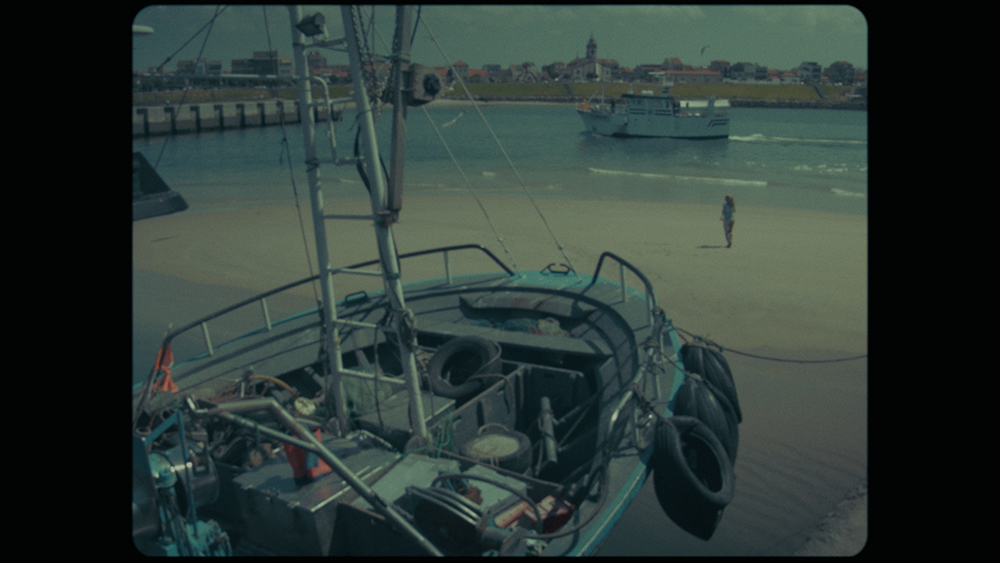
This performance begins with a simple question: where does a body end and a landscape begin?
Rather than occupying space, the performer enters into a field of exchanges. Movement becomes a way of dissolving the distinction between figure and back, allowing the body to oscillate between visibility and disappearance, individuality and atmosphere. Camouflage is not understood as imitation but as a state of permeability, in which the body composes itself with light, texture, vegetation, architecture, wind, and sound.
The work departs from the idea of identity as a stable human condition. Instead, it proposes an expansive, protean body that exceeds itself through rhythm. The performer becomes less a singular figure than a temporary constellation of movements, continually reshaped by the environment it inhabits. Presence emerges through relation rather than autonomy.
As Astrida Neimanis writes, "our bodies are bodies of water." This proposition extends beyond the literal. It suggests that we are constituted by flows, exchanges, and continuous circulation rather than by fixed borders. The performance embraces this fluid ontology, imagining the body as a porous ecology whose contours are constantly negotiated.
What emerges is neither a character nor a representation, but an organism in resonance with its surroundings. The choreography unfolds through attunement rather than mastery, proposing a more-than-human embodiment in which rhythm replaces identity, transformation replaces permanence, and relation becomes the primary form of existence.
To become camouflaged is not to disappear. It is to become irreducible to the limits of one's own body—to inhabit a mode of being that is collective, mutable, and continuously in the making.
As Donna Haraway reminds us, "we become-with each other or not at all." This notion of becoming-with is central to the performance. Identity is understood not as an autonomous condition but as a process of composition with the living world. Camouflage is therefore neither mimicry nor disappearance; it is an act of attunement. Through movement, the body enters into correspondence with its surroundings until the distinction between subject and environment becomes porous.
The work proposes a choreography of permeability, where rhythm replaces identity and relation replaces hierarchy. The body expands beyond itself, becoming less an individual than a constellation of encounters- mutable, relational, and always in the making.
– Cecilia Bengolea
The event takes place as part of Cecilia Bengolea’s exhibition Raw Rhythms at Solar – Cinematic Art Gallery, presented in partnership between Solar and Circular Festival.
– Cecilia Bengolea
The event takes place as part of Cecilia Bengolea’s exhibition Raw Rhythms at Solar – Cinematic Art Gallery, presented in partnership between Solar and Circular Festival.
Cecilia Bengolea (Buenos Aires, 1979) is an artist working across performance, video, sculpture, and dance. Her practice explores the body, individually and collectively, as a medium of memory, empathy, and emotional exchange. Using movement as a form of animated sculpture, she conceives dance and performance as sites where symbolic, social, and natural energies converge, with her own body often positioned as both subject and object.
She has collaborated with artists such as Dominique Gonzalez-Foerster, Jeremy Deller, and numerous dancehall performers such as Craig Black Eagle and Oshane Overload. Her choregraphic work in collaboration with François Chaignaud was awarded by the Prix de la Critique (Paris, 2010) and recieved the Young Artist Prize at the Gwangju Biennial (2014). Bengolea has been commissioned choreographic pieces by Ballet de Marseille, Ballet de Lyon, Ballet de Lorraine, and Pina Bausch Tanztheater Wuppertal.
Bengolea’s work has been exhibited internationally at venues including the Guggenheim Bilbao, Centre Pompidou, Tate Modern, Palais de Tokyo, Dia Art Foundation, Bourse de Commerce – Collection Pinault, Museo Reina Sofía, MUDAM Luxembourg, Art Basel Parcours, Desert X, and the Gwangju and São Paulo Biennials, among many others.
Her work can be found in major private and public collections, including Pinault collection, Museo Reina Sofia, Kadist France, Mudam Luxembourg, TBA21 Academy, MIRE - Fond cantonal d’art contemporain, The Vinyl Factory, Le CNAP, Le Consortium, Fiorucci Art Trust, Tank Shanghai, Fundación Arco, and the MONA - Museum of Old and New Art of Tasmania among others.
In 2023, she was a guest teacher for the Performance master’s program of the Architecture University of Venice, Italy.
She lives and works in Paris and Buenos Aires.